
Choosing The Right Baking Tools & Equipment For Your Kitchen
Introduction
When you set out to bake cakes, breads, pastries, or desserts, having the right baking tools and equipment in your kitchen can make all the difference. Whether you’re a home baker or preparing to enroll in a baking course, knowing what to invest in first and what you can defer will save you time, money, and frustration.
If you’re looking to learn professionally or take your baking skills to the next level, institutes like Incredible Art, a leading baking and pastry institute in Kochi offer comprehensive training that covers not just baking techniques, but also the correct use of tools and equipment. Their Diploma in Baking & Pastry in kochi course is ideal for anyone serious about pursuing a career in baking or mastering the craft with hands-on guidance and industry-grade equipment.
In this blog, we’ll walk you through how to choose the right baking tools and equipment for your kitchen, based on your baking goals from hobby to semi-professional.
Why choosing the right tools matters?
Baking is as much science as art. Precise measurements, consistent mixing, proper temperature control, and even airflow matter. Using substandard or inappropriate equipment can lead to uneven baking, sticking, overcooking, or undercooking. A good set of baking tools also increases your efficiency and confidence in the kitchen.
For students at a baking and pastry institute in Kochi like Incredible Art, part of the training is getting familiar with industry-grade tools so that when you step into a professional kitchen, you’re already comfortable with quality gear.
Essential baking tools & equipment: What to start with
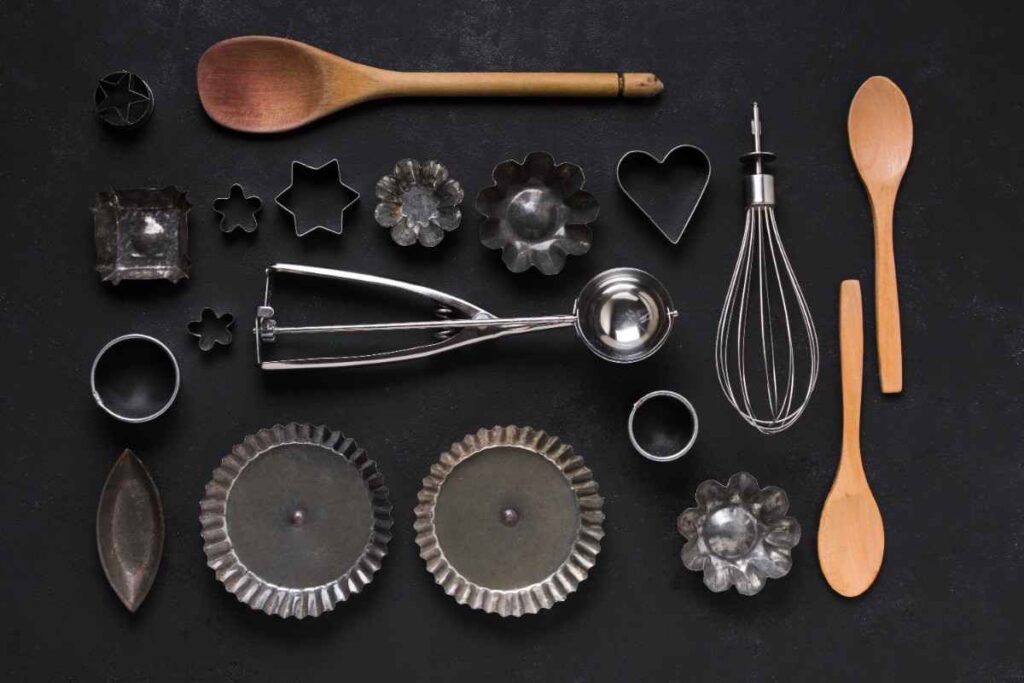
Below are categories of tools and equipment you should consider, organized from “must-have” to “nice-to-have.” Many of these are taught or used in courses at pastry institutes.
1. Measuring & precision tools
- Digital kitchen scale: Arguably one of the most important tools. Baking by weight is more accurate than volume measurements.
- Measuring cups and spoons: For liquid and dry ingredients (though weight is preferred for serious baking).
- Thermometer / oven thermometer: Ensures your oven temperature is accurate.
- Timer / stopwatch: Helps you follow baking times precisely.
2. Mixing, stirring & scraping tools
- Mixing bowls (various sizes): Stainless steel or glass bowls are durable and versatile.
- Whisks: Balloon whisk, flat whisk, or French whisk depending on what you bake.
- Silicone spatulas / rubber spatulas: For scraping batter, folding, and mixing without damaging bowls.
- Offset spatula / palette knife: Useful for spreading icing, layering cakes, and lifting delicate baked goods.
- Bench scraper / bowl scraper: Helps scrape, cut, and shape dough, and keep your workspace tidy.
3. Bakeware & pans
- Cake pans, loaf pans, tart pans, muffin tins: Choose quality nonstick or stainless steel versions.
- Sheet pans / baking trays: Useful for cookies, roasting, sheet cakes.
- Pie plates / tart tins: If you bake pies or tarts, these are essential.
- Springform pans: Useful for cheesecakes or delicate cakes.
- Silicone baking mats / parchment paper: Prevents sticking, improves cleanup, and ensures even baking.
- Wire cooling racks: Let air circulate under baked goods so they cool evenly.
4. Mixing / mechanical tools & appliances
- Hand mixer: Great for small to medium batches.
- Stand mixer: A more powerful, hands-free option with attachments for kneading, whisking, and mixing.
- Food processor / blender: While not strictly “baking only,” these help with nuts, fillings, dough prep, etc.
- Oven (convection, fan, or professional grade): The heart of any baking setup.
- Proofing box / cold storage / controlled humidity equipment: Useful if you’re baking breads or delicate pastries professionally.
How to choose based on your needs & budget
Here are some guiding principles when selecting your baking tools and equipment:
1. Start with basics
If you are just beginning, prioritize precision tools (scale, measuring cups), mixing tools (spatulas, bowls), and basic bakeware. You can upgrade later.
2. Quality over quantity
Buying fewer, good-quality items (stainless steel, food-grade material, durable nonstick) will last longer and give better performance.
3. Multifunctional tools
Items like a stand mixer with multiple attachments, a set of nesting bowls, or a versatile baking pan are better than many single-use items.
4. Space & storage
Make sure you have space to store your baking tools and equipment. Heavy or bulky tools (stand mixer, large pans) should be usable and storable.
5. Consider your baking style
If you make more cakes, focus on specialty pans, icing tools, spatulas. If breads and pastries, invest in proofing equipment, dough scrapers, and latticing tools.
6. Plan for upgrades
As you grow (especially if you study in a baking and pastry institute like Incredible Art), you’ll need to acquire more advanced tools. The early foundation helps you transition smoothly into professional gear.
Using your tools well: Tips & best practices
- Always pre‑heat your oven fully before baking.
- Calibrate scale and oven periodically.
- Clean and dry tools thoroughly to prevent rust or contamination.
- Store measuring cups/spoons nested to reduce space.
- Use silicone or parchment liners in pans to reduce wear and sticking.
- Rotate pans during baking for even heat distribution.
In the training programs at Incredible Art Academy, students get hands-on experience with many of these baking tools and equipment under expert guidance so they can understand not just what to use, but how to use them well.
Ready to turn your passion for baking into a profession?
Join the Diploma in Baking & Pastry at Incredible Art Kochi’s premier baking institute and learn hands-on with professional tools, techniques, and expert guidance.
Conclusion
Choosing the right baking tools and baking tools and equipment is not just about having fancy gear, it’s about making smart, scalable investments that help your baking improve over time. Whether you’re baking for your family, starting a small home bakery, or pursuing professional training at a baking and pastry institute in Kochi like Incredible Art, a well‑equipped kitchen will set you up for consistent, reliable results.
Want help building a starter tool kit based on your budget? Or guidance on which brand/tools to pick? I’d be happy to help!
FAQs
1. What is the difference between baking tools and baking equipment?
“Baking tools” usually refer to handheld instruments (spatulas, whisks, scrapers), while “baking equipment” refers to larger appliances or durable gear (ovens, stand mixers, proofing boxes). Together they form your complete baking arsenal.
2. Do I need a stand mixer or is a hand mixer enough?
A hand mixer is sufficient for many home baking tasks (small to medium batches). But if you plan to scale, do breads, or want hands-free operation, a stand mixer is a worthy upgrade.
3. What is the first tool I should invest in as a new baker?
A reliable digital kitchen scale is a top priority, because accurate measurement is fundamental in baking. Next, get good mixing bowls, spatulas, and a basic set of pans.
4. Can I learn to use advanced baking tools if I enroll in a baking course?
Yes, at Incredible Art (a baking and pastry institute in Kochi), students are trained hands-on with professional baking tools and equipment, so they become comfortable using advanced gear.
5. How often should I replace or upgrade baking tools?
Replace tools when they show signs of wear: nonstick coating peeling, warping, rust, or performance decline. Upgrades can be gradual start with essentials and gradually adding specialty tools as your skills grow.
6. Can I start baking with minimal tools and then upgrade?
Absolutely. Many successful bakers begin with just the basics (scale, bowls, spatulas, basic pans) and gradually invest in better tools as their confidence and need grow. The key is to get consistent results with your current setup first.-
incredible art
Contact
- VX Arcade, Kaloor, Kadavanthara Road, Kathrikadavu Junction, Kochi, Kerala 682017
- 079071 01551
- info@incredibleart.co.in
Retail Store Contact
- Marriott Hotel, The Artiste, Tribute Portfolio Hotel, Prestige Forum Mall, NH66, Bund Road, Kundannoor, Maradu, Kochi
- 079071 01551
- info@incredibleart.co.in